|
 |
Organisational Structure: An Important Consideration With the complexities of global operations far greater than those of domestic ventures, effective management of the global corporation becomes vital. Michael Brooke, in his book on International Management - A Review of Strategies and Operations (which forms part of the series of Hutchinson's Management Studies Books) highlights the importance of the right organisational structure as being part of effective international planning and management. Some key aspects of organisational structure are:
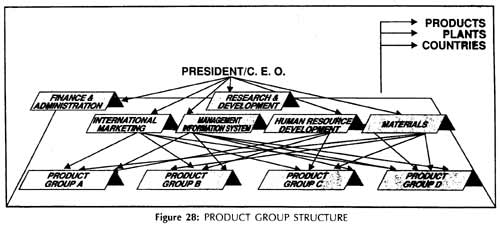
Evolution of Organisational Structures In order to exercise a certain amount of control over the firm, the parent company tries to maintain uniformity in the different business that make up the global organisation. As the firm expands, it becomes more difficult for the parent company to exercise effective control due to the geographic and cultural distance separating the countries and because of the need for diversity among different locations and varied styles of operating. Organisational structures are based on whichever way the organisation develops, depending upon the business itself and also on factor such as location, products, markets, sources of raw materials and technology employed. Organisational structure cannot remain static and is also dependent on variables that include present and future importance of domestic and foreign markets, the historical and background of the organisation, the nature of the firm's business and product strategy, the management traits and philosophy of the firm, and the capacity to adjust to major organisational and environmental changes. What is becoming increasingly important is that firms develop local strengths while maintaining a global overview of their performance and outlook. With the expansion of the global firm, top management realizes the existence of the variour organisational structures available for effective global functioning which minimize possible domestic - global conflict. The structures, however, may differ from country to country because of varying activities and environmental requirements. Types of Organisational Structures The type of organisational structure to be adopted will depend on a variety of factors including the fulfillment of corporate objectives as well as the tax structure of the host country, etc. Some of the types of organisational structures available to global firms, are detailed below: Product group structure Here overall goals and strategies are controlled from the central office, and area specialists have different geographic bases for different product groups. Each product group has primary responsibility for planning and controlling all activities for its products on a worldwide basis. This structure works well when the products are diversified, require high technology and are targeted for different end use markets. It has however, the disadvantage of the duplication of functional tasks and problems of coordination. A conflict may also arise between domestic and international marketing in respect of product mixes, between the advantage of global standardization for optimizing manufacturing cost effectiveness and the area of developing product differentiations to meet various demands and needs, Figure28 shows a representative example of a Product Group Structure. Geographic Structure This type of organisational structure divides global operations into geographic regions. Staff functions and product development functions are centralized but each area division has responsibility for various functions and coordinates marketing, production and finance within each specific geographic zone. A geographic organisational structure also provides the formal framework through which activities are orgaiised so as to let the company optimize its business globally and improve performance in each country in which it operates.
In
this strategy, the global firm has an area or regionwise manager
totally responsible for a particular area. In turn there is a manager
totally responsible for each of the countries under the regional
manager's control and
|