|
 |
|
Complexities One of the greatest challenges facing global firms is the need to develop human resources capable of handling global operations. This is a major challenge as global firms operate in multiple cultural environments whereas individuals tend to be brought up in single environments. There may be exceptions in the cases of people who have worked for the diplomatic corps and/or have traveled extensively, who have been exposed to different cultures and are therefore more adaptable. The upbringing and cultural values in one's family environment also makes a difference to one's ability to adapt to other cultures. The policy of employing nationals from home countries and sending them out to run foreign operations has been the standard practice of traditional global firms. Attractive hardship allowances and improved prospects on return are among the incentives provided. Some factors that expatriates consider in overseas postings are whether they will be able to afford the same lifestyle in terms of modern living, if they will be able to establish a social circle, whether good schooling is available for children, chances of advancement when they return to their own country, language difficulties, concern about safety and medical care. The common western practice is an extension of the same approach. However, a world that is rapidly shrinking and with comfort and security improving in many parts of the world, expatriates in some countries of Asia and Africa, having tested the benefits and having adapted to a new country, are often reluctant to return home if opportunities for growth are lacking within one area, expatriates often switch jobs and continue to live in these societies for decades sometimes even marrying locally. Today, the trend is increasingly towards finding global managers in the mould of the American Apple Corporation and Compaq's chief operating officers, both Germans. This type of manager can skip easily across frontiers, from function to function (though they are most often wanted for special, rather than general talents) and industry to industry. When the UK-based advertising giant Saatchi & Saatchi was looking for the global answer, for example, the CEO selected was a Frenchman, with no advertising background, who had made his mark running a medical market-research firm in the US. The language skills of these managers are most often impeccable, their knowledge of management and management practice outstanding, their flexibility probably the greatest displayed by managers at any time in business history - and with some having more than a couple of important international jobs before the age of 40 - their ambition, like their experience, knows no frontiers. Such a manager would never, for example, get into the situation that a British general manager newly arrived in Bangkok found himself in, waving aside his predecessor's Mercedes, asking instead for a Suzuki or a Mini, which reason dictated would be far easier to handle in Bangkok's congested traffic. Status and hierarchy however, dictated otherwise, throwing the Thai team concerned in a cultural quandary. After all, if the expatriate general manage drove a Suzuki, it could well mean that they would have to forgo their cars altogether and cycle to work-instead! Developing Global Professionals The pressing need for global firms is to plan strategy to develop global managers. Some of the means to develop these are given below:
Some companies also try to identify potential global managers at an early stage. For example, at Royal Dutch/Shell, where the total employment exceeds 150,000 personnel, long term forecasts (up to 15 years in advance) for human resource requirements are developed. Requirements for manpower both for different operational regions and for varying business functions are gauged. Demand shortfall is thus estimated based on availability of staff and on the company's growth plans and recruitment undertaken. Training for Global Managers Training is an extremely important part of developing global Managers. Recent research carried out by Stewart Black of the Amos Tuck School of Business Administration, Dartmouth University, reveals that US executives receive minimal training in the area of global business, since it is thought that success in the USA predisposes one to success overseas. The study also showed that a career move from the USA to an overseas location was considered a professional down-gradation, where's quite the opposite is the case in Europe and Japan where in fact global experience is of great value in the development of a manager's career. In a world where globalisation is a rapid and all-encompassing phenomenon, the second approach will become increasingly relevant, and firms should therefore build up specialised programmes within their systems orientated towards training professionals for managing global businesses. Global training may be defined as training that imparts an understanding of other cultures, values and ways of life, with a view to adapting one's own ways to the imperatives of other cultures and the needs of global business. In the 50s and 60s global training in most companies comprised instruction on travel and health precautions, information on local conditions, occasionally language teaching and very rarely, some information on the business or economic climate of the country. No effort or attention was paid to the cultural aspect of global training. Texas Instruments, one of the early American companies to go global in the 50s and 60s, had extensive overseas training provided both by employees who had worked abroad and by external consulting firms. The company has created world training centres in different sites around the world and have consolidated and standardised a curriculum of 15 training courses. Goodyear, with over half of the profits and turnover of its US$12 billion tyre business chalked up overseas, and with 45 manufacturing facilities located worldwide, has a training network for both sales and manufacturing staff in the company's three geographic zones, viz. Europe, Asia and Latin America. AT & T provides training to create awareness of cultural differences, develop negotiation skills and encourage team work, with trainers coming from different backgrounds both from within he company and from various parts of the world. 3M is another company that has accelerated its global training programme, offering more than 400 courses to its 20,000 employees. Training is imparted with programmes covering subjects such as leadership, doing business with the Japanese and the art of crossing cultures. Global and cultural issues need to be integrated across the spectrum of business, into product development, manufacturing and marketing objectives. To fully realize the potential of global training, corporations around the world have to be receptive about organising training programmes for their staff. The methods of training can be:
A gradual process is thereby set in motion through which a person's preconceived notions, methods, ways and values are modified via a process of formal and informal training in preparation for global business management. Johnson and Johnson (J & J) is a company that values and encourages entrepreneurship throughout the organisation. One of the major problems J&J has faced in the integration of its global operations has been getting people to perceive the totality of its business vis a vis the three diverse J&J business sectors, viz. consumer toiletries, pharmaceuticals and professional products. Accordingly, the company's thrust has been to bring in its managers from all over the world into the senior management team at headquarters. Fiat, the Italian car manufacturer in its move to train managers internationally runs a programme called Internationalisation of Managers. Conferences for managers from different subsidiaries operating abroad are organized under this programme, where such managers interact with personnel from headquarters. The company also has an in-house publication, in various languages, sharing information about global businesses and global personnel. Unilever too has a similar in-house publication. Some key attributes of global managers
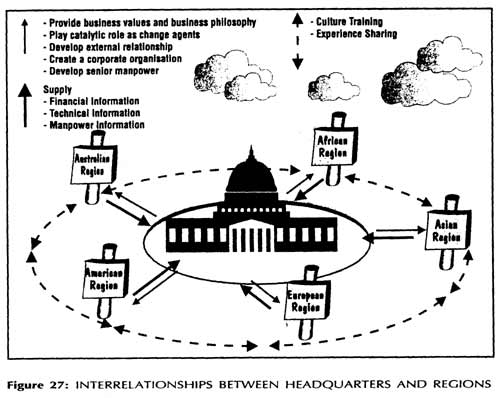
The task of managing a global firm is extremely complex given that managers need to think and act globally, trying to optimise global resources and global opportunities and taking care of global threats while simultaneously realising that each individual operation takes place within a sub-region or a nation and that various internal adaptations have to be made. It is these complexities that prove one of the greatest challenges in the development of global firms. Colgate quizzed all of its top European managers about the kind of executive that works best in an international setting. Among the main attributes that emerged as a result of the questioning was flexibility in managing. Unilever, the Anglo-Dutch food and soap giant, shies away from bossy executives. "We tend to look for people who can work in teams and understand the value of cooperation and consensus," says Floris Maljers, chairman, Unilever NV, the group's Dutch arm. The magazine International Management reported that, " employers increasingly look for candidates who speak up to three languages, with English competence almost taken for granted." Indeed English is no longer enough. It may permit the executive to travel anywhere in the world, but it will not permit him to talk to the millions of consumers who do not speak the language, nor does it allow him to listen to local TV or hold discussions with local government authorities. Moreover, global firms now need executives with an entrepreneurial streak: executives who look at things differently, who do not mind changing product lines, moving to new geographic areas, or relocating to more modest plant and office facilities. The new global manager also not only survives unpredictability, but thrives on it. While the person in question needs to have a well-developed sense of direction, he must be agile in getting around the obstacles that suddenly arise in his path. For cross-cultural training to be effective, a formalised process is required by corporations where they must first identify the fact that they need cross-cultural training, the personnel who require this training and the objectives of the training. Training can therefore be planned and programmes designed accordingly. It is important that this be done for training is quite an expensive exercise. For instance, when a few technicians go overseas to impart technical know-how and install machinery, it may not be necessary that they undergo a comprehensive range of cross-cultural training programmes covering all relevant areas. It is senior managers on the other hand who need to develop cultural understanding through training as it is they who have a vital role to play in determining the destinies of corporations overseas, and in the process spend long spells in these countries. An effective training model should be developed. A starting-off point could be a questionnaire through which employees are asked to give feedback about the countries with which they interact, the nature of the interaction that takes place, i.e. buying selling, technical transfers, etc. and identify the difficulties they face with each country in respect of the areas that they deal in this questionnaire, one can also build in the factor of the amount of time that is spent in the interaction whether it is written, verbal, telephonic, or whether it is a personal visit, etc. Influence of Culture on Business Nicola Phillips, in her book Managing International Teams, dwells at length on influences of culture on international business. Cultural traditions from nation to nation vary vastly and depend on a centuries-along cultural history that covers ways of life, customs, norms, upbringing and value systems which are in their own way dependent upon climatic and geographic factors. This results in differences in attitudes in various facets of life, particularly as regards attitudes. Attitudes in this context cover the entire gamut, from those towards family, women and children, towards religion, morality, social life and politics. While firms develop their own culture and values based on the business philosophy of say founders or shareholders, directors or leaders, the cultural backgrounds and orientation of the people employed and the places the firm operates in are equally relevant. The relationship between the organisation and the individual in Japan, for instance, is seen as a bond of permanent nature. Firms, in fact, are traditionally committed to the employment of the offspring of their employees. Thus a 'womb to tomb' concept of relationship exists here and even recession does not result in workers being laid off. On' the contrary, workers voluntarily work long hours, take pay cuts and fewer holidays when times are bad. Pride is an important element of the Japanese psyche and deemed necessary for both quality production and national success. After the World War II, when the Japanese were defeated politically and militarily, their way to national reconstruction was an economic one. A similar outlook is held by other South-East Asian countries Korea, and Taiwan. In other parts of Asia, in countries such as India, Pakistan, Bangladesh and Sri Lanka, the traditional relationship between Employer and employee is a feudal, paternalistic one where the employer is seen as a father figure and the employee the child, with the employer expecting to take an active part in every aspect of the employee's life, including participation in family marriage customs and rituals. In contrast, moving westwards, relationships between the organisation and the individual are more formal in Europe. Based more on individualism and related needs than on the needs of the organisation, these sometimes prove to be areas of conflict. Cultural influences also affect attitudes towards hierarchy. Within organizations the salary wage difference in the west between the highest and lowest paid workers can be quite large, whereas in Japan it is small. Japanese managers and workers eat in common canteens and dress identically on the shop floor. Employees work at similar tables in offices that have conference areas to accommodate visitors and meetings, unlike in most other countries where hierarchy differences are visible everywhere. The attitude towards time and more specifically towards how it is used varies a great deal among different cultures. For instance, the Americans and West Europeans usually perform one activity at a time and try to keep as much as possible to schedules and appointments, in keeping with their western culture. This is quite contrary to the Latin American and Middle Eastern cultures where the exact time of an appointment is not of crucial importance and where interruptions such as telephone calls, unexpected visits-etc. may upset schedules. The outlook towards the past, present and future varies among different cultures. For instance, older civilisations like the Chinese and Indians, which have been around for thousands of years, dwell a lot on the past and hence their history, tradition and cultural heritage are important to them. Hence an understanding of these factors is important in one's dealings with them. On the other hand, future orientated people such as those with short civilisation history like the Americans, emphasise more on the freedom and opportunities for the people and the company in the future. While the usefulness of technology and key raw materials are intrinsic, their values are also linked to the context in which they exist or operate. For instance, a scarce material like oil is perceived differently in different cultural contexts. In the Middle East, it was used as a means for economic development and later on as a political lever; threats were made to cut off supplies. It is also an economic life-line in many countries such as Mexico and Nigeria where oil helps to improve the standard of living of the people. It can also be perceived as a too by a government to dominate and control its own people. Finally, in developing core values, it is important to have a few values people can remember and implement, according to Dr John Fulkerson, head of HRD at Pepsi Co. Fulkerson also believes in the importance of similarities as opposed to differences, and does not over-emphasise the importance of cultural adaptation. The technology of manufacturing, processing and bottling, for example, does not change with the location of manufacture, he opines, and while differences may be discussed, they must not be given undue importance. This entire issue is of course a debatable one, as managers have repeatedly found the key to success in varying environments is the ability to adapt locally without resorting to cultural differences as an excuse for inefficiency. Some business-related national characteristics Child-rearing practices across the world influence national characteristics and in turn have a bearing on adult attitudes to business. In African families, children are generally a part of a large extended family, and often view society as such. In Japan, the spirit of conformity engendered in children causes them to fall in line with common practice. English child-rearing tradition has children respectful of elders and doing as they are told, whereas in the USA, an independent approach is encouraged. All this early experience usually translates into different cultural values, developing into a way of life as individuals grow up. Attitudes to women area also reflected within the business world. Thus in the Arab world, women are not encouraged to be a part of business life, and business associates are rarely even invited home for meals. Social attitudes also tend to spill over into business. Thus in Australia and New Zealand, business relationships very rapidly become warm and friendly, whereas those in Britain tend to remain formal until the people involved get to know to each other better. Business relationships with the French generally progress better if French is spoken, whereas in Germany efficiency, punctuality and thoroughness are appreciated. It is said that the French love being entertained, and while the Germans entertain for business reasons, personal lives are kept strictly apart. In China, as in Japan, one goes through the niceties of other exchanges before talking about business. Body contact is generally avoided. Both in China and in Japan the style of conversation is mild and soft-toned and at no time does one speak loudly. Relationships seldom get personal. Japanese rarely say a direct 'no', as this is considered somewhat offensive. Deep-rooted cultural differences between China and the West are constantly in play and can influence the outcome of the simplest meeting. Face to face dealings here are also not limited to direct interaction with business associates, but are equally, important in the course of a factory visit, at a hotel reception desk, or a banquet. In some traditional cultures when people are asked to deal with someone who is 10-20 years younger than them, they feel insulted even though the younger person may be well-qualified, competent and experienced. For instance, the Greeks, the Italians, the Japanese and most Asians would feel uneasy if they had to deal with very young Americans or Europeans. In Latin America, life is laid back, time is not important and having fun is part of business life. Arab businessmen tend towards physical contact, holding hands, kissing and hugging each other, quite in contrast to western practice where it is the men who shake hands with each other and the men and women who kiss! Cultural integation orientation Besides the embassies of some countries that offer orientation programmes for students and executives proceeding abroad for studies or work, there are now various professional agencies offering cultural integration training to prepare those going abroad. A frequent practice in these training programmes is to include families in the orientation process. This has become necessary given that the failure rate of executives proceeding on overseas assignments ranges between 10 per cent to as high as 60 per cent in some cases.The costs per person for this can be anything from US$25,000 to US$1,000,000 depending upon the country and the level of the professional concerned. It would be an equally useful practice for such agencies to provide post-adjustment feedback to find out how the trainees have benefitted from the orientation and what problems continue, thereby allowing for fine-tuning and improvement of the programme itself. A company would thus be able through training to mirror HP's success in China, for example. As the BHP representative in China Points out, "BHP recognises that Beijing needs someone who is not out of the straight BHP mould.... business in China is based on relationships, and how well you develop these is what gives you your opportunities..." Influence of Culture on Global Competitiveness American and British companies operate in a very different competitive environment as compared to Japanese, French and even German companies. American managers are constrained by matters such as profits and stock market performances in the short term and need to be on their guard against the possibility of a takeover. The German approach stresses a more long-term development of a core business strength, usually technology-based, and these companies have strong-knit relationships with the government, financial institutions and industry. The governments of some Asian countries control competitive conditions in their countries. Thus there are significant differences in the competitive environment of nations as a result of different histories, cultures and politics. The emerging economies of East Europe are likely to follow the West European modes of development. Global Cultural Management When several national cultures operate within an organisation, an important part of the international manager's role is to ensure that different cultures understand and respect each other. If one culture dominates, others may be suppressed. In a Latin American example, an American company lost a bid to a Swedish company although they had a superior product at a low price and had made a very sophisticated presentation. The Swedish company instead spent a great deal of time to get to know their potential clients, socialised and interacted with them and on the strength of the personal rapport, won the contract from the South American customer. As more and more companies try to compete globally, more executives are crossing borders. Mastering the tricky mix and hiring managers who can think globally while understanding local nuances means hiring what some companies call global managers- people skilled at dealing with a variety of cultures and at bringing a diverse team together. "You need as much cultural mix and diversity and experience as possible...if you are running a global company," says Bob Poots, personnel director for the European division of London-based imperial Chemical Industries PLC. ICI's executive ranks were predominantly British 20 years ago; now only 74 of the company's top 150 executives worldwide are British. Mr Poots says he looks for people who are good at getting along with colleagues at home. "That skill travels remarkably well," he says. Any problems an executive has in dealing with colleagues, he figures, will be magnified in a foreign setting where much more effort is needed to build up understanding and trust. Whether different cultures have been brought together through mergers, acquisitions or diversification of global operations, the global manager has to be aware of how the organisation functions and how he may interact with individuals, of different national characteristics. The "right way" of organising, says Dr Fons Trompenaars, does not exist. Dr Trompenaars, founder and managing director of the Holland-based Centre for International Business Studies and author of Riding the Waves of Culture, points out that Europeans need not even look as far as Africa or Asia to focus on cultural differences in the approach to business when these loom large within Europe itself. Cultural differences are alive and well and cherished in contemporary Europe, and with the progress of European economic integration, national boundries may be blurring, but cultural barriers tend to get reinforced. These differences are most fundamental between Euro-Latin organizational culture and North-Western European culture and while they may be a hindrance, they are equally an expression of Europe's great strength. The main question is how to make optimal use of the insights that result from cooperation between a variety of cultures. Take the Airbus project as an example, Trompenaars elaborates. The point is not to put all the Italians on the design to have all the engineering done by the Dutch, and test and production work by the Germans. "No, the point is to control this operation as well as we can, and not walk away from cultural differences," he states. The challenge of Europe, as in any multicultural environment, is to create synergy within diversity. To be successful, therefore, the global manager has to understand the differences between cultures as a step in learning to manage global teams, and must in fact go beyond understanding to be able to manage the differences. The effective global manager will need to deal with the issues of cross-cultural variances and develop performance appraisal and training needs across a wide variety of cultures. Appropriate motivational and reward systems as per the cultural needs of individuals must also be planned. Generally speaking, if a European manager is praised in public, he or she will be happy, while an Asian counterpart may well be embarrassed. In the management of cross-cultural teams, varying levels of organisational loyalty and commitment need to be recognised. These then need to be further developed along the same lines with various individuals whose cultural backgrounds differ. Global managers must learn to manage in the context of continuous change and diversity. A study in the late 80s, for example, found a startling difference between the attitudes of Japanese and American employees in the matter of making suggestions. Of the US companies conducting suggestion systems, only 8 per cent of employees participated and individual cash rewards averaged US$400. Employee participation in Japan stood at 67 per cent, and in half the companies it was as high as 90 per cent - and the reward for suggestions was equivalent to just US$2.10. The global manager will hence also allow for cultural differences when taking a quality programme across borders. Roland Dumas, a research manager at Zenger-Miller Inc., feels that companies should not export a domestic quality improvement programme which may be alien to a foreign subsidiary. Locals will think of it as an attempt to shove something foreign down their throats. Overseas operations should rather be informed of a company's quality standards and a parent company should move in and demonstrate only if these standards are not being met. Thus global managers create links across traditional, organisational and national boundaries. According to John Henderson of the Massachusetts Institute of Technology, strategic partnerships will be formed to "achieve higher performance and/or lower costs through the joint, mutually dependent action of independent organisations or individuals." The basis for such alliances will be mutually-shared purpose that transcends cultural differences. In times of stress individuals will naturally tend to revert to the kind of behaviour prescribed by their own culture. For this reason it is very important that global managers be sensitive and aware of the cultural differences in their teams. One of the keys to creating a truly global corporation is having a top management team comprising of personnel from different nationalities. In short, having only parent company people around in headquarters while local persons run local operations is not appropriate. Such top appointments should be of people who have actually worked in different environments, and speak different languages. Companies that have this type of richness of top management staff are among others. Royal Dutch/Shell, ICI and Unilever. However, this is an exception rather than a rule in the UK with more than about 80 per cent of companies having 80-90 per cent of their directors of local origin. This holds true for American companies too. Travelling is an extremely important means of interaction, communication and learning. It is one of the quickest and best methods of knowing people, knowing local situations and understanding the difficulties being faced in different parts of the world, while learning to accept each other's values. Headquarters and Regions : Striking a Cultural Balance Strong commitment to the organisation is necessary irrespective of whether the home country or the regional headquarters are being represented. This will result in quick responses to any managerial problems that may arise. A healthy, effective corporate culture can be created by having a very participative management approach that allocates responsibility to all levels. This results in better communication and improved awareness of the company's profit and sales projections and strategies. Decisions on input needs or output targets should be based on the point of view of the host organisation and not on those of the parent company. Unilever's top management believes that managers should not feel swamped by the corporate culture but maintain individual country-based identities and synergise this with the corporate culture. Unilever employs 300,000 people around the world, involving 75 countries, and has an informal cultural identity which permeates a working system not much given to highly systemised documentation and MIS. "The successful Asian nations have governments that have been relentlessly prodding and pushing their companies to move to higher levels of competition," says Michael Porter, professor of business administration at Harvard Business School. It is this competitive pressure, he adds, that is the principal factor in compelling up gradation to take place so rapidly in certain Asian econornies. However, the very pace of change in East Asia, according to some analysis, is placing traditional methods of political, social gpd economic management under intense pressure. Standards of living and education are improving and the influence of western ideas and values is increasing. According to Sarwono Kusumaatmadja, the Indonesian minister for administrative reforms, 'The west relies on management of conflict while we operate by managing by consensus. We progress on the basis of common denominators. We always say that individual rights have a social function." This subordination of individual rights has reduced adversarial activity in the economy as well as the politics of East Asia. Governments, management, labor and unions - where they are permitted to operate - generally have a more cooperative relationship than in the west. Many of the more dynamic East Asian economies draw strength from a blend of capitalism, Confucianism and government controls that encourage competition while preserving the authority of family, community and state within a framework of the western way of economic, social and political management. The Confucian tradition values human community and order more highly than individual rights and while individual excellence's encouraged by laying emphasis on discipline and competitive education, it puts priority on family ties, group cohesion, hard work and perseverance. However, given its enormous diversity of culture and historical experience, Pacific Asia is not likely to subscribe to a single value system, let alone an ideology embracing the whole of the region. It is ironical that when US companies are trying to resemble Japanese companies in their style of operation, Japanese companies' trying to become like US organizations as they were 15 years ago says Professor Michael Jensen of Harvard Business School.
Unliver has six nationalities on its board but most companies executive directors come almost exclusively from the home country. While there is an inclination for managers to surround themselves with people of the same background, global man management must go further, it is vital to develop a global culture at the top. This process has already commenced at the other end of the line. As Kenichi Ohmae stated in his book years ago The Borderless World, "Ten years ago when I spoke in English at Boccini, an Italian university, most of the students listened to me through a translator. Now they listen to me in English and ask me questions in English... Global citizenship is no longer a phrase in the lexicon of futurologists. It is every bit as real and concrete as measurable changes in GNP or trade flows." |