|
 |
|
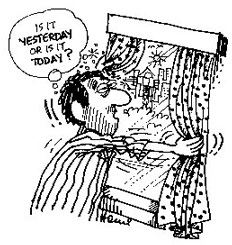
Jet lag is the upsetting of the circadian rhythm, resulting in the alteration of bodily functions. The circadian rhythm of bodily functions is linked to sunlight. Research shows that a hormone called melatonin may help eliminate jet lag by halting and restarting the body's circadian rhythm. However, work on the subject is still at the research stage. While there is not one clear medical denifation what causes jet lag, it is my experience that the condition results from a combination of the following factors:
The results of jet lag cover a range of conditions such as fatigue, confusion, loss of appetite, upset bowels, excessive sensation of heat or cold, inability to sleep when you are supposed to, and waking up when you are not supposed to. Here are some ways in which to manage jet lag:
For very short trips or transit stops, it may be best to keep to the time of your final destination. Sleep experts in the United States suggest that hotels create East Coast and West Coast rooms with controlled lighting to make travellers feel as though they were in their normal time zone. Nowadays, a quick-acting mile sedative, if you tend to be the hypertensive type, is recommended, especially on long flights. Sleep experts also say that exposure to sunlight in the daytime may be a good way to minimize the fatigue that comes with jet lag because sunlight helps regulate late the body's biorhythms. If daylight is not available, then exposure to three 150-watt light bulbs will have the same effect on the body's circadian rhythm. Tokyo's Hotel Okura offers its clients the benefits of such light exposure. Professionals advise travellers to consume high-protein foods in the morning for energy and carbohydrates in the evening to induce sleepiness. Jet lag is a serious matter. In the past, certain firms, particularly Japanese ones, actually worked this factor into guidelines for traveling executives. If the total travel time exceeded eight hours - starting from departure from home or hotel to arrival at the next hotel - no business meetings were permitted for a period of 24 hours. The aim was to allow the body to adjust itself, thus avoiding the possibility of jet lag impairing business judgement and decisions. My ultimate experience of jet lag took place in my younger days. After full day of work in West Africa, I set off on a flight to New York. This entailed 12 hours of flying time with one stopover. I then had an onward connection from New York to Tokyo which involved a flight that was, at the time, the longest nonstop flight in the world on 747 special: 13 hours and 45 minutes! The flight to New York was delayed by about four and a half hours so after more than 16 hours in the air and in transit, I had to travel for another 14 hours, arriving at Tokyo rather late at night. My meeting the next day had been scheduled for the late morning with the intention of giving me time to recover from the journey. While I did manage to sleep that night, the morning meeting found me a complete zombie. I was not merely tongue-tied, but literally speechless. I cut a sorry figure when I had to explain to a Japanese colleague that I had foolishly overstepped the limits of my biological capacities, and hence was ill-equipped for the meeting. |