|
 |
|
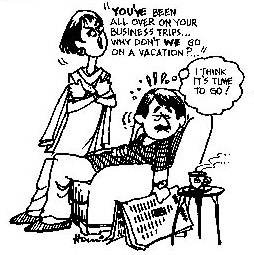
It may be wanderlust, or just that time of year. The purpose could be an agreement to be negotiated, a problems that needs your personal attention, new markets to explore or old associated to meet…. Whatever the reason, it is time to get going.
The
decision may be taken at home or in the office,
and the trip may be made by air, sea or overland,
by road or rail. Various factors will determine
the mode of transport: the purpose of travel, funds
available and time factor. Other forms of travel have their advantages. A train ride may be a quicker option for a short trip if you take into account the time needed to travel to and from airports and check-in. Surface travel makes for greater knowledge and understanding of the country. While travellling by road may be an onerous task in a developing country with little infrastructure, taking the train may be a good trade-off if, in exchange for a little discomfort, you gain exposure to yhour surroundings and a first-hand feel for the country. This book focuses on air travel, which has been my main experienced as a globetrotter. Where to Go? If you are undecided, there are sources available to help you pick a destination or provide the information required on a particular country or city. Do
not close your mind to innovations as these often
lead to far more enriching experience than just
following the well-trodden path. While in Brisbane,
Australia, my wife and I decided to venture to the
beautiful Silky Oaks Lodge instead of following
the bandwagon to Cairns and the Great Barrier Reef.
The decision was the result of intense investigation,
lasting over three hours, in a Brisbane travel agency.
It turned out to be one of my most memorable vacations.
A friend of mine chose to explore the beauty of
the Himalayas by camping in a virgin area of the
foot hills instead of staying in one of the crowded,
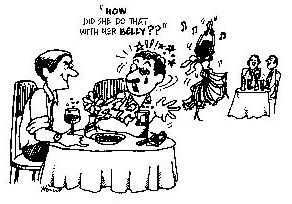
commercial hotels. He learned far more this way. For the business traveler, chambers of commerce and trade associations are especially rich sources of information. Embassies and consular offices are another good starting point. The information available may be in print or in the form of electronic databases. Once at your destination, the Yellow Pages are a valuable source of local information for business leads as well as entertainment ideas. Telephone services in developed countries are another quick, up-do-date and accurate source of information which can come in a generalized, pre-recorded form, or as replies to specific questions on sight-seeing options or the opening hours of certain attractions. Excellent on-the spot information comes in human form. Local business associates are in obvious source of facts, but consider a broader-based approach. Beyond the confines of your economic or social circle, the entire gamut of people encountered while traveling can be a rich source of ideas and data. A chat with the concierge can turn up interesting facts while the receptionist, waiter or house keeping staff can also yield much - perhaps more than the concierge, whose offering may be coloured by perceptions of what the traveller's needs might be. Talking to ordinary people about where they eat or where they go to on Saturday nights can be more enjoyable than standard brochure recommendations. Even a chance encounter on a flight or in a shop or elevator can provide insight or specific leads to places of interest and fun. I remember an incident in the early '70s in the Middle East when a chat with a waiter led me to an all-night souk, a sort of covered marketplace. This one came alive at night with extensive shopping and eating facilities (drinking was restricted), plus live entertainment by way of Bedouin music and authentic belly dancing.
Recommended List of Travel Guide Books
|